The health system’s response characteristics to any refugee crises have special characteristics. Optimal and flexible use of health services is essential in order to meet the needs that arise. Greece has been at the center of such crisis in the last 3 years. The purpose of this study is to record the emergency refugees' transports carried out by the National Center of Emergency Care (“ EKAB”) of Thessaloniki during a 6 months period. In a retrospective study, selected data for the use of emergency care service by the refugees’ camps around Thessaloniki were recorded and analyzed. Parameters included the date, time and location of the incident, patient demographics, callers’ status and incident type. Data on refugee flow in Greece was also included for the same period. Data from 1916 records were analyzed, the majority of which were ages up to 45 years (> 70%). Time distribution of the data displayed increased transport during the first 3 months of the study, followed by a steady decrease. Most of the transports were carried out during the last 3 days of the week. In comparison with the general population, high incident of pediatric cases were recorded. Trauma cases were also high, (35%) - with equally high rates of crime-related injuries. Finally, many ambulance transports were carried out due to delivery or early pregnancy-related problems. Young people and children are the most frequently users of ambulances’ transport from refugee hosting camps. However, due to the complexity of the problem and the dynamic nature of the camps’ population composition, more studies are needed in order to properly evaluate the use of each sector of the health system by refugees.

Continue reading
This case report focuses on the anesthetic management of a patient with Myasthenia Gravis who underwent left-sided colectomy, due to the presence of a tumor on the left colic (splenic) flexure. Myasthenia gravis is a chronic autoimmune neuromuscular disease which is characterized by differ-ent degrees of weakness of skeletal muscles. The anesthetic management and treatment of every patient with myasthenia gravis should be performed carefully, due to the fact that many periopera-tive complications may occur. In our case anesthetic technique included the combination of general anesthesia, with the use of neuromuscular agent and thoracic epidural blockade with the use of a catheter, which permitted intermittent boluses doses and continuous infusion of local anesthetics and opioids. Neuromuscular blockade was reversed with the use of sugammadex. Patient’s periop-erative management was effective and uneventful.

Continue reading

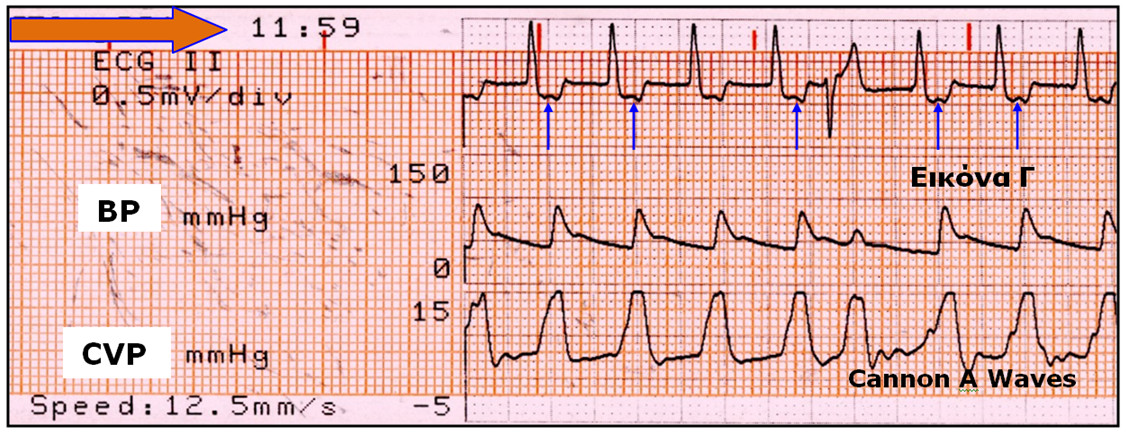
The deficiency of the natural heart pacemaker, the conduction disturbances and the appearance of arrhythmias are common complications after cardiac surgery. Placement of epicardiac electrodes (ventricular, atrial, or both) during cardiac surgery remains common practice, even though few patients will actually need some kind of temporary epicardiac pacing for various periods of time. Temporary epicardiac pacing may be ventricular, atrial or atrioventricular, depending on the specific features of each patient and it aims at preserving the cardiac rhythm, securing the desired heart rate and achieving an acceptable cardiac output. Temporary epicardiac pacing is not without danger, since, under specific circumstances, it may have a negative impact on the hemodynamics of the patient, to the point of circulatory collapse. It may also cause ventricular tachycardia (R on T phenomenon) and cardiac arrhythmias (if pacing is not synchronized to the heart’s natural pacemaker). Ventricular Pacing and Sensing (VVI) is accomplished by the placement of electrodes only on the ventricles, which a priori means a certain degree of hemodynamic compromise, due to the loss of atrial contribution in preserving cardiac output. In certain occasions, this impact may be even more significant. This case report concerns  a patient who underwent Coronary Artery Bypass Grafting (CABG) and after placement of the electrodes of temporary epicardiac ventricular pacing he presented significant decrease in systemic arterial pressure and the appearance of cannon A waves on central venous pressure (CVP) tracing every time the pacemaker was triggered. These phenomena, which receded after the disconnection of the pacemaker, consists a case of Pacemaker Syndrome.This problem was solved by adjusting the pacemaker’s frequency at a rate lower than that of the patient’s natural pacemaker.

Continue reading
Continue reading

The vast advance in medical knowledge forces us to super specializations. Yet, as we get to know better the tree, we might lose the perspective of the forest. Team work and more specifically, diversity teams, keep us in touch with the different aspects of knowledge. And although diversity has potential to disrupt group functioning, in reality, in both in behavioral and psychological science and in business arena, diverse teams are proven smarter1-2.

Continue reading

In cardiac surgery, head-down and head-up positions are used to control cardiac filling pressure and for cardiac exposure. Even though benefits of head positioning are not clear, they can also bring some risks. Understanding physiological consequences of positioning can help avoiding serious adverse events and complications. In this prospective study we investigated the effect of head-down and head-up position upon systemic and cerebral haemodynamics and cerebral oxygenation and their correlation with Bispectral Index (BIS) in CABG patients under general anesthesia before surgical incision. Thirty patients were enrolled in to the study. After induction and before surgical incision blood pressure, heart rate, central venous pressure, cardiac output, stroke volume variation, BIS, cerebral oxygen saturation and middle cerebral artery blood flow rate values of the study patients were measured at neutral, head-down and head-up positions. The significance of the difference in terms of the means between the positions was studied with the repeated measures analysis of variance, while the significance of the difference in terms of the mean values was analyzed with Friedman test. Statistically significant increase were recorded in blood pressure, cardiac output, central venous pressure, cerebral blood flow rate and BIS values in the head-down position. The head-up position was associated with decrease in cardiac output. We demonstrated that both positions are safe for cerebral haemodynamics and oxygenation in ischemic heart patients. We showed that the short term head-down position can improve cardiac function, probably due to increased preload in ischemic heart patients with normal ejection fraction; however, the head-up position can be detrimental for systemic haemodynamic even for a short period.

Continue reading

Intracranial hypertension (IH) is currently managed in the intensive care unit with a combined medical – surgical approach. Progress in monitoring and in understanding pathophysiological mechanisms of IH could change current management in the intensive care unit, enabling targeted interventions that could ultimately improve outcomes. The prevention of secondary brain damage from raised intracranial pressure (ICP) is the central focus of neurologic intensive care. The primary goal of ICP management is to maintain ICP below 22 mmHg and cerebral pressure perfusion (CPP) above 60 mmHg. Optimization of oxygenation and cerebral blood flow (systolic blood pressure greater than 110 mm Hg) are essential. The use of positive end-expiratory pressure (PEEP) can increase intrathoracic pressure, thereby potentially increasing ICP by impeding venous drainage. Maintenance of euvolemia and strict monitoring of fluid balance are necessary. Several commonly described measures may be effective in reducing raised ICP such as keeping the patient’s head neutral and elevated at 15 to 30° as these optimize venous drainage. Proper muscle relaxation, adequate analgesia and sedation depth could further minimize elevation of ICP by reducing metabolic demand, ventilator asynchrony, venous congestion, and the sympathetic responses of hypertension and tachycardia. Fever increases brain metabolism and should be treated aggressively. Prophylactic antiepileptic medications should be considered only for traumatic brain injury. Dexamethasone and other steroids should not be used for treatment of IH, except in tumor patients. Hyperventilation should be limited to emergency management of life-threatening raised ICP until other methods of managing IH are available as it can acutely and reliably lower ICP and PaCO2. Hyperosmolar therapy is the principal medical management strategy for elevated ICP. Therapeutic strategies involve the use of mannitol or hypertonic saline. Mannitol is often considered the gold-standard therapy for medical management of IH but the preponderance of current evidence suggests that hypertonic saline could be. Failure of other conservative measures to control ICP should prompt consideration of the initiation of pentobarbital infusion. Aggressive strategies, like surgical decompression or hypothermia, carefully tested, have controversial effects on outcome. Decompressive craniectomy is indicated for massive ischemic stroke as it improved the survival rate and Glasgow outcome scale. Placement of an external ventricular drain should be considered in patients with moderately sized ventricles and signs and symptoms of raised ICP.

Continue reading

Patient care in Intensive Care Units is characterized by high demanding tasks, which leads in daily high workload. The aim of the study is to evaluate the effect of patient’s sedation level to workload for the certain task. It also examines whether workload lowers over time, as an effect of the experience gained by the repetition of the task. NASA- TLX tool was used as workload assessments method during a complex monitoring task in an adult Intensive Care Unit environment. The latter included monitoring and recording of skin conductance variability, noise level, hemodynamic and respiratory parameters were monitored during 4 hour routine in two groups of patients. The group was defined by the sedation level (Ramsay sedation score); otherwise no major differences were spotted in their characteristics. Both raw and weighted data of the NASA-TLX tool were included in the analysis, which was performed with MS Excel 2007 (Microsoft Co, USA) and Rstudio® IDE v.0.99.903 (Rstudio Inc, Boston, MA, USA). Patients’ sedation level did not affect NASA-TLX measured workload. The former was valid both for raw values and weighted data of the subscales of the NASA-TLX tool.  In the second part of the analysis where the raw values were treated as time series data, it was shown that some subscales (Ment, Phys) had a tendency towards lower values, others (e.g. Temp, Ef) had a relative stability and others  (Per) increased over time. The total workload (OW) did not seem to lower over time. While the patient’s sedation level does not affect workload of the specific task, several subscales of the NASA-TLX index do reveal a tendency over time; a fact that may be used as learning curve/ experience assessment for a given task. However, further studies are needed in order to define its future utility.

Continue reading

Noonan syndrome (NS) is an autosomal dominant disorder characterized by anatomic and pathophysiologic abnormalities.Anesthetic management in these cases has many challenges regarding airway management and cardiovascular stability.We present a case report of a 11-year-old male child who was scheduled for maxillofacial surgery under general anesthesia.

Continue reading

We report a case of persistent bronchospasm after anesthesia induction. The case refers to an elective surgery of an ulcerous formation in the intergluteal cleft. Bronchospasm is not an unusual event in the immediate intubation period, especially in patients with respiratory disease, but in most cases resolves uneventfully. In this patient, despite thorough treatment in the operation room, ausculatory findings remained unchanged, with progressive worsening of arterial blood gases. After this event, the surgery was postponed and the patient was transferred to the ICU for further management. In this article we describe the steps that were taken in order to manage this adverse event and ensure patient’s safety and successful outcome.

Continue reading

Γλώσσα

Αναβάθμιση του Impact Factor

Ιστορικό

ATOM Feed
RSS Feed
RDF Feed
Άδεια Creative Commons