Treating children in an intensive care unit aims at the reversal of physiologic derangement of their organism while caring for comfortable physical and psychological environment. Any correctable environmental and physical factors causing discomfort should be addressed before the introduction of effective analgesia and sedation by pharmacological means; a normal schedule for sleep is desirable, and attention should be paid to the provision of feeding and hydration, lighting, environmental noise and the temporal orientation of the patients.
Continue reading

In the field of paediatric critical care, there is considerable uncertainty and variation in the area of analgesia and sedation in critically ill children. Consensus guidelines on sedation and analgesia in critically ill children are available since 2006, although clinical practice reveals variations both in pharmacological agents and regimens used.
Continue reading
Mechanical ventilation can have adverse effects on pulmonary function. The present review focuses on what has recently emerged as one of the most serious potential complications of mechanical ventilation, ventilation-induced lung injury (VILI). For the purposes of this review, the forms of lung injury will be discussed according to the following headings: barotrauma, volutrauma, atelectrauma, and biotrauma.
Continue readingMechanical ventilation can have adverse effects on pulmonary function. The present review focuses on the effects of perioperative mechanical ventilation and its role in ventilator-induced lung injury. For the purposes of this review, lung protective ventilatory strategies will be discussed.
Continue readingThe essential contribution of medical emergency teams (M.E.T) is to decrease the frequency of sudden deaths and the pointless transportation of patients in the intensive care units. The aim of the present study is to record the number and the type of emergency in-hospital calls, the clinical follow up and outcome, the departments and the staff of hospital that were covered by M.E.T (medical and/or nursing) that participated in them, the medications that were used, and the number of involved individuals per incident, as well as the type of monitoring and the fluids that were used. This study covered a 5 months period of emergency calls.
Continue readingThe review presents literature data and focuses on the acclaimed need for transition from general to dedicated Neurosurgical/Νeurological or Neuroscience Intensive Care Units (NSICU). There are solid data from well designed metanalyses showing that at least in the United States, the wider implementation of intensivists in the ICUs, led to significant reductions in ICU and hospital mortality and patient’s length of stay (LOS). Given the variation in ICU physician staffing plans and the potential for reduced mortality implied by these studies, a more rigorous evaluation of the optimal ICU organization is essential. Highly specialized vs. less specialized ICU physician staffing is associated with reduced hospital and ICU mortality and LOS.
Continue reading
Letter from the Editors
Epilepsy and Anaesthesia
Comparison of systemic hemodynamics after subarachnoid administration of either levobupivacaine or ropivacaine to elderly hypertensive patients
Emerging issues on opioid treatment of chronic pain
Known and unknown problems after prolonged use of opioids
How to balance efficacy versus side effects of chronic opioid use
When to start and when to terminate an opioid treatment
Αγαπητοί συνάδελφοι,
Στα τέλη του 2010, το διοικητικό συμβούλιο της Ε.Α.Ε.Ι.Β.Ε. μου ανέθεσε την ευθύνη της σύνταξης του περιοδικού “ΗΛΕΚΤΡΟΝΙΚΟ ΠΕΡΙΟΔΙΚΟ ΠΕΡΙΕΓΧΕΙΡΗΤΙΚΗΣ ΙΑΤΡΙΚΗΣ” - ejournal. Με μεγάλη χαρά αποδέχθηκα την τιμή και με την ευκαιρία αυτής της επιστολής σας ευχαριστώ όλους (διοικητικό συμβούλιο, μέλη και αναγνώστες του περιοδικού) θερμά.
Continue readingManagement of epileptic patients in the perioperative period is an anesthetic challenge. New drugs and surgical procedures are being used to treat epilepsy. Various anaesthetics exhibit both proconvulsant and anticonvulsant properties at different doses and under different physiologic conditions. Continue reading
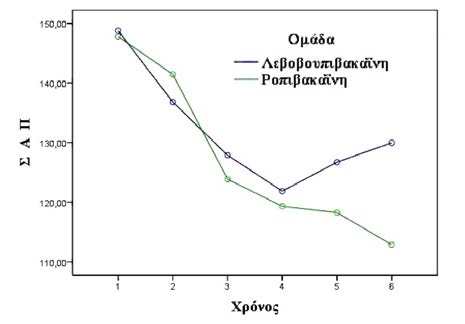
This study compares the cardiovascular effects of spinal levobubivacaine or ropivacaine, in equipotent doses, for endoscopic urologic surgery. Eighty elderly, hypertensive patients, with physical status ASA I-III, scheduled to undergo transurethral procedures, were randomly allocated to receive spinal anesthesia with either 15 mg of levobupivacaine or 22.5mg of ropivacaine, in hyperbaric solutions.
Continue reading


