Transfusion related acute lung injury (TRALI), first described as a clinical entity in 1983, is characterized by acute non cardiogenic pulmonary oedema with hypoxia occurring within few hours of receiving blood products. It accounts for 1:5000 of all known transfusion reactions and is one of the leading causes of transfusion related death, approximately 5%. TRALI is thought to be underrecognised and under-reported. Suspected cases should be reported to the blood bank so any other products from the particular donor may be quarantined.

Continue reading

We have assessed intubating conditions and haemodynamic changes in three groups of 30 ASA I or II patients after induction of anaesthesia with propofol 2 mg*kg-1, remifentanil 0.5 μg*Kgr-1 and rocuronium 0,6 mg*kg-1 (group R), propofol 2 mg*kg-1 and remifentanil 1.5 μg*Kgr-1 (group F) and propofol 2 mg*kg-1, remifentanil 1.5 μg*Kgr-1 and midazolam 0.015 mg*kg-1 (group M).

Continue reading

The objective of this study was to evaluate onset times and tracheal intubating conditions after administration of rocuronium or mivacurium in children of different ages. In this randomized double-blind study, 40 healthy (ASA I) children aged 1 to 14 years were studied. They were divided, according to age, into two groups: Group A (n=20) included patients 1 to 3 years of age and Group B (n=20) 4 to 14 years of age. After general anesthesia induction patients in both groups were further divided into two subgroups.

Continue reading

Aiming the investigation of potential differences in accuracy of the algorithms of pediatric anesthesia in everyday practice, 338 children where studied, from newborns to 14 years old, who underwent scheduled or emergency operations in a 3 months period. They were divided according to their age into 4 groups (38 newborns and infants, 43 children from 1 to 3 years old, 90 children from 3 to 6 years old, 167 children >6 years old).

Continue reading

Horner's syndrome or occulo-sympathetic paralysis is a disorder occurring infrequently as a complication of epidural anaesthesia. The incidence increases when epidural analgesia is used in obstetrics possibly because of physiological and anatomical changes in obstetric patients favouring spread of the local anaesthetic.

Continue reading

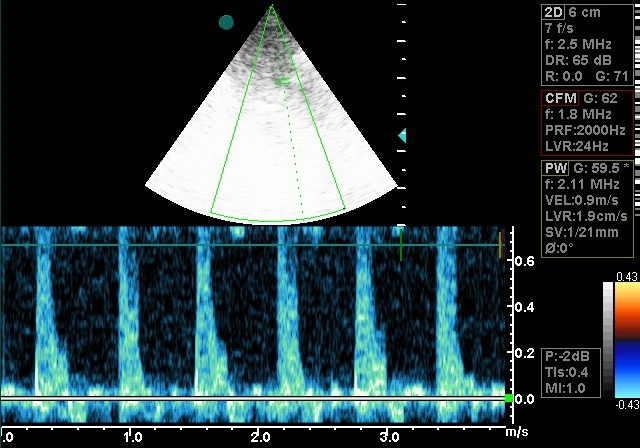
Transcranial Doppler (TCD) is increasingly utilized in patients with lifethreatening neurologic injury and has several practical applications in neurocritical care. It holds promise for the diagnosis and monitoring of vasospasm (VSP) in patients with subarachnoid hemorrhage (SAH) and the detection of increased intracranial hypertension.

Continue reading

 Molecular Mechanisms of Cell Adaptation to Hypoxia and the Role of Ischemic and Anesthetic Preconditioning. Implications for the Anesthetist

Postoperative cognitive impairment and postoperative delirium: risk factors, pathophysiology and management

Διατήρηση της ακεραιότητας του νωτιαίου μυελού κατά τις επεμβάσεις επιδιόρθωσης θωρακοκοιλιακών ανευρυσμάτων: αναισθητικές και χειρουργικές πρακτικές

Assessment of heart rate variability at different depths of anaesthesia during surgery

Caudal administration of levobupivacaine and neostigmine for postoperative analgesia in children

Μεταβολές της πίεσης στα πνευμονικά τριχοειδή μετά από χορήγηση ενδοτοξίνης σε χοίρους

Anaesthetic techniques during pregnancy. A case report and review of the literature

Cell protection against hypoxia can be mediated by brief periods of sublethal ischemia, a phenomenon called ‘preconditioning’. The molecular mechanisms that are responsible for cell protection are extremely complicated; however, extensive research in molecular biology and cellular physiology has uncovered many different signaling pathways, especially in cardiac tissues.

Continue reading

A significant number of patients exhibit impairment in cognitive function immediately following surgery or later; the impact of this postoperative cognitive dysfunction on the recovery and quality of life of the patient but also on the necessity for supportive and rehabilitation care is important. Risk factors for postoperative cognitive impairment and postoperative delirium have been described and it is these groups of patients that require early identification and careful follow up to avoid complications in postoperative care.

Continue reading

This article aims at presenting the anesthetic and surgical techniques used to preserve spinal cord integrity during thoracoabdominal aortic aneurysm (ΤΑΑΑ – ThoracoAbdominal Aortic Aneurysm) repair operations.

Continue reading

Γλώσσα

Αναβάθμιση του Impact Factor

Ιστορικό

ATOM Feed
RSS Feed
RDF Feed
Άδεια Creative Commons