


The reduction of homologous blood transfusions remains an important goal. The actual blood loss and the positive fluid balance during cardiac operations involving CPB result in a fall in the haematocrit and represent major risk factors for blood transfusions. Methods and techniques which lead to a decrease of haemodilution are important when aiming at fewer transfusions in such operations.
Continue readingThe management of patients, who had previously undergone percutaneous coronary interventions (PCI) with or without coronary artery stenting and who are presenting for noncardiac surgery has become a major topic of interest and concern for anesthesiologists worldwide. This review will update recent reports, as well as recommendations for the perioperative care of these patients.
Continue readingInevitably, ethical dilemmas and end-of-life decisions are issues that need to be faced in the common practice of intensive care units. In this review these dilemmas are approached through the medical ethical issues of patient autonomy, beneficence, non-maleficence and justice. Patient autonomy is further analyzed as opposed to medical paternalism with reference to historical, political, social and legal particularities.
Continue reading
The aim of our study was to compare video laryngoscopy and direct laryngoscopy views, and the resultant intubation conditions as well, provided by video or conventional laryngoscope respectively, in patients receiving general anaesthesia for elective surgery. One hundred patients, with no expected difficult airway, were randomly allocated to undergo tracheal intubation with the Macintosh video laryngoscope or a conventional Macintosh laryngoscope.
Continue reading
The aim of this study was to investigate the effects of a positional change of regional cerebral oxygen saturation values (rSO2) because of the sitting position, before and after the administration of general anaesthesia. Twenty five consecutive patients of ASA class I or II undergoing shoulder surgery under general anaesthesia were chosen to participate in this study.
Continue reading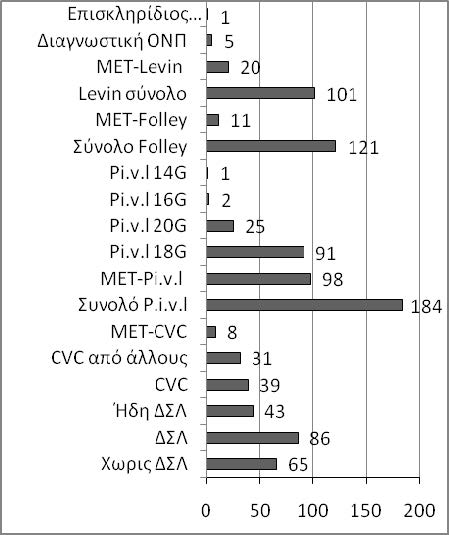
The essential help of medical emergency teams (M.E.T.) is to decrease the frequency of sudden deaths and the pointless transport of patients in the intensive care units. Aim of present study is to record the number and the type of urgent intrahospital callings, the departments of hospital that were covered by M.E.T, the staff (medical and/or nursing) that participated in them, the medications that were used, and the number of involved individuals per incident, as well as the type of monitoring and the fluids that were used. In the particular study were recorded the urgent calls from the 07/06/2006 up to the 07/01/2007 (7 months).
Continue readingOur study compared the effectiveness between two of the proposed as rescue manoeuvres to overcome difficulty, in advancing a tracheal tube, during railroading over the fibreoptic bronchoscope. A ninety degrees anti-clockwise rotation (90ΑCWR) of the tube or cricoid cartilage pressure application (CCPA) was randomly performed in eighty patients undergoing fibreoptic orotracheal intubation under general anaesthesia, in whom first attempt to railroad the tracheal tube had failed.
Continue reading
The aim of this study was to examine and compare the efficacy and safety of combining strong opioids (transdermal fentanyl) with weak opioids (codeine or tramadol) for the management of severe cancer pain. Forty six patients (25 male / 21 female) aged 42-80 years were studied. According to an eleven-grade numeric rating scale (NRS; 0 = no pain, 10 = severe pain), they all had severe steady pain intensity greater than 5 (NRS >5) despite treatment with weak opioids and adjuvant drugs, as proposed by the 2nd step of the World Health Organization (WHO) analgesic ladder, at the maximum tolerated doses.
Continue readingThe scope of this study was to investigate if changing the direction of the Whitacre 26G needle aperture in regional anaesthesia during planned caesarean section produces a difference in the dose-response curves of the level of subdural blockade achieved by ropivacaine 0.75% and a standard dose of opioid. One hundred and twenty healthy parturients were blindly randomised in two groups, with 5 subgroups of 12 women each.
Continue reading
We present two cases of pregnant women with placenta percreta invading the bladder, along with a short review of the literature. The two women sustained early and late major haemorrhagic complications requiring massive transfusion (up to 142 PRBC and 353 blood product units) and urgent reoperation. They were both treated in the ICU and discharged in good state.
Continue reading


