


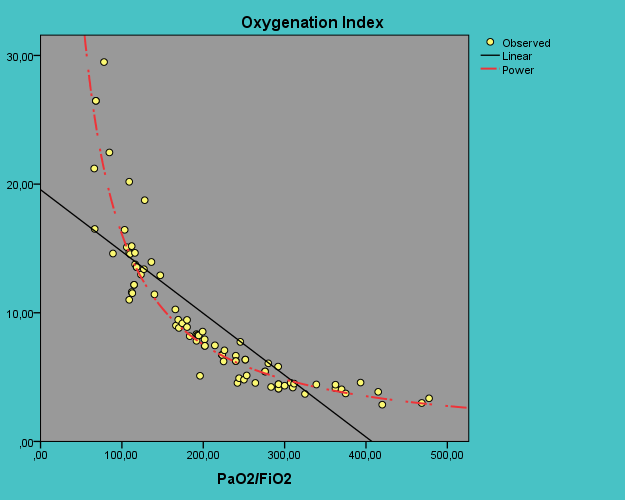
Trend towards noninvasive, easy to use monitor was always a challenge. Numerous indices have been used to monitor the progress of patients on positive pressure ventilation. The present study compares different indices in a mixed larger intensive care unit (ICU) population. In a prospective observational study Arterial blood gases (ABG) analyses were obtained from 225 patients under mechanical ventilation in a polyvalent adult ICU. Values of ideal body weight (IBW), Body mass index (BMI), PAO2, PaO2/FiO2 ratio (PFr), SpO2/FiO2 ratio (SFr), SpO2/PEEP ratio (SPr), SpO2/PaCO2 ratio (SPCr), Oxygenation index (OI) and Ventillatory ratio (VR) were calculated; and further correlation analysis was conducted. In Pressure control ventilation mode a relative strong relation between PFr and SFr and OI was found; yet further regression analysis implies that no direct replacement of PFr with SFr can be made without limitations, in clinical setting. In Volume control ventilation mode moderate relation was found between SFr and PFr. In the present study a moderate relation was found between SFr and PFr. The results agree with previous published studies; the differences among them lie in the different design of each one of them. The authors believe that- given the fact that one still considers using broadly PFr as index of oxygenation- SFr can be used safely as a surrogate for PFr only for certain disease states. Larger series are needed in order to define those patients groups and these pathophysiological conditions.
Continue reading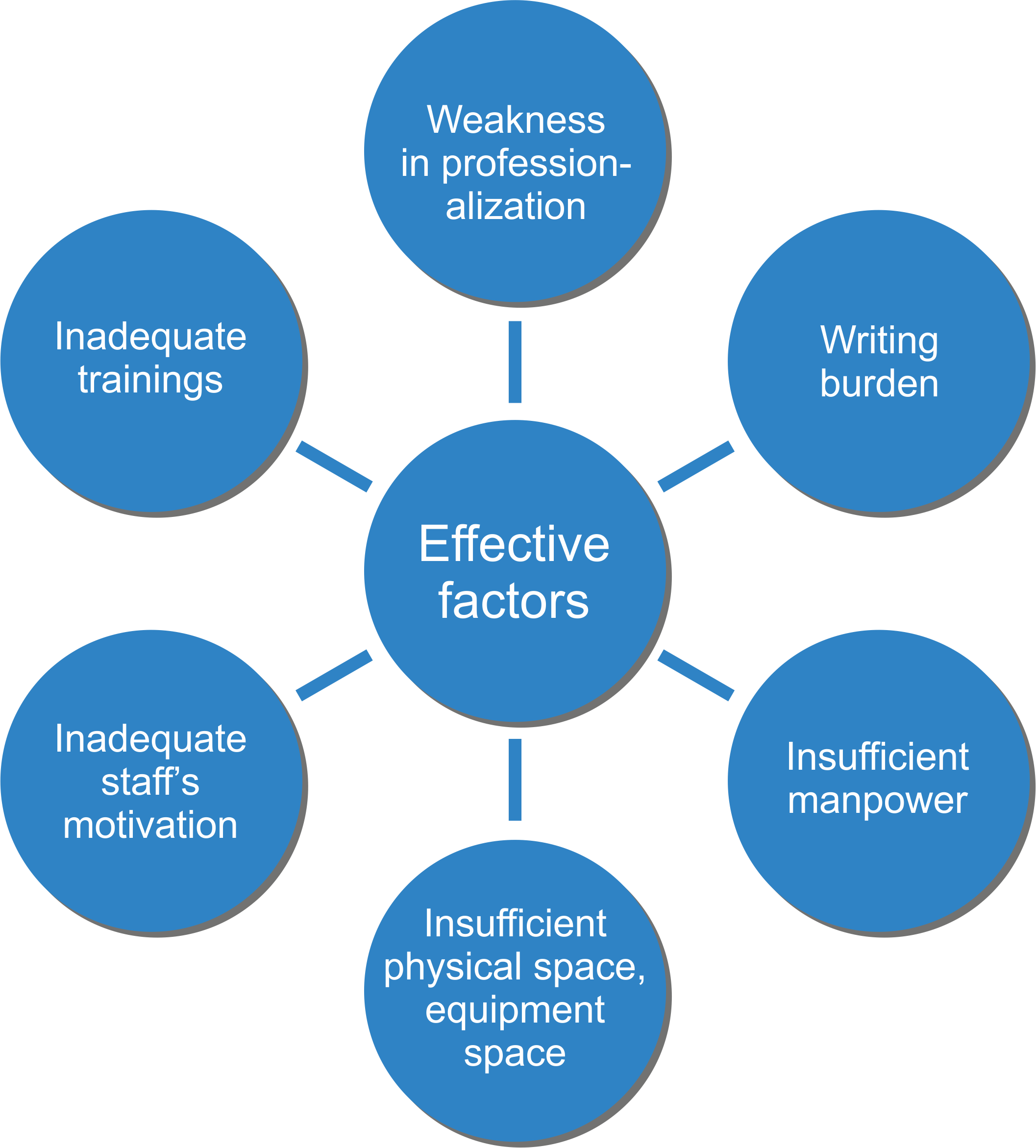
Access to appropriate and high quality health care is one of the most important ways to reduce maternal and infant mortality. This study evaluates the quality of care during childbirth, the effective factors, and promoting strategies in Lorestan province, Iran. This research is a mixed explanatory study (i.e., quantitative and qualitative). The quantitative part is descriptive-analytic. The quality of 200 care processes during childbirth was assessed in the health centers of the province. The data were gathered through the checklists prepared according to the guidelines of the Iranian Ministry of Health. Statistical analysis was performed using SPSS software. In the qualitative part, the strategies for solving the problem were assessed through interviews with service providers, maternity administrators, and senior decision-making university officials. According to our results, the levels of care quality during childbirth were intermediate in all four phases. The lowest levels of quality in the first, second and third stages were associated with Leopold's maneuver, hand washing and pulse control, respectively. Based on the interviews, the main reasons for the reduction of care quality include lack of staff’s motivation, overcrowding and shortage of nursing workforce, low attention of officials to the Department of Midwifery, and the high burden of writing in the maternity. To improve the quality of services, the authorities in Lorestan University of Medical Sciences propose strategies such as making some incentives for care promotion. Considering the quality of care during childbirth as intermediate in all four stages in the province and investigation of the reasons indicating the lack of sufficient incentive in midwives, it is recommended that strategies such as financial incentives, greater use of private sector to reduce public sector workload, quality increase and further use of in-service training to improve the quality of services be adopted.
Continue reading
Dear colleagues,
Traditional publishing is an ex cathedra affair, top down, hierarchical. Electronic publishing is essentially egalitarian1. That’s why the present journal had never adopted printed form.
Here, we would like to underline some of the changes that occurred in the journal. These changes were designed to maintain excellence while improving the efficiency of the review process and taking advantage of new technology. Thus, new features have been added in the article section and feedback surveys are planned to be performed in regular basis. New sections for bibliographic information and editorial board / reviewers’ panel have been added. Organizational changes for a better workflow are also en route. The journal is already accepted in several electronic databases (see “indexing” section), while application for inclusion in several others is also under way. For all the changes, every website visitor is invited to explore these new features.
Continue readingPain is a disastrous manifestation of cancer that influences the patients’ quality of life, their families, and health care providers. It is a multidimensional symptom that includes the physical, psychosocial, emotional and spiritual character of the human organism. Despite the development of new analgesic drugs and updated guidelines, the pain management remains insufficient, and some patients with mild to severe pain do not received adequate pain treatment. This insufficient management can be attributed to barriers related to health professionals, to the patients, and the health care system. Common professional barriers include the bad pain evaluation, the lack of knowledge and skills, and the doctors’ reluctance to prescribe opioids. The barriers related to the patient include cognitive factors, emotional factors, and the compliance with analgesic regimens. Barriers related to the health system, like the limited access to opioids, and limited availability of pain and palliative care experts, consist additional challenges, especially in poor countries. Given the multidimensional nature of cancer pain, and the multilevelbarriers involved, the effective pain management demands multimodal interventions from interscientific groups. Educational interventions to the patients and health professionals it is possible to improve the successof pain management.
Continue reading
Clinical evaluation of pupils is considered as an essential part of neurological examination. The pupillary response to light is controlled by the autonomic nervous system. Numerous factors affect pupils dynamics, like e.g. luminance, visual field area, pain, drug administration, age, the functional integrity of anatomical structures involved, e.t.c. Moreover, pupillometry card method and examination of pupil reaction with the use of a penlight is subjective to a lot of bias. Portable infrared pupillometry allows a more objective and detail evaluation of pupil’s dynamics. That’s why it has already found applications in various clinical areas, like e.g. neurology, psychology, ophthalmology, endocrinology, anesthesia, pain management, intensive care, emergency medicine. This review focuses on physiology of pupil’s dynamics and on applications of infrared pupillometry in perioperative setting.
Continue reading
The occurrence of intraoperative oxygenation impairment is common even in healthy individuals and will vary depending on the patient and the type of surgery. The purpose of this study was to evaluate the incidence of oxygenation impairment in patients with normal lung function and to study the safety and efficacy of three different recruitment strategies. Out of a total number of 430 patients, 150 patients developed intraoperative oxygenation impairment, which was defined as the drop of PaO2/FiO2 ratio below 300. These 150 patients were randomly assigned into four study groups according to the recruitment strategy applied. Group A (N: 38): Application of three hyperinflations of the lungs at airway pressure 40cmH2O for 10 sec, followed by an increase in PEEP from 5 to 10cmH2O. Group B (N: 38): Increase in PEEP from 5 to 10cmH2O. Group C (N: 37): Application of three hyperinflations of the lungs at airway pressure 40cmH2O for 10 sec, without any PEEP alteration and Group D (N: 37): No maneuver. Measurements were taken at the phase of oxygenation deterioration and at 5, 15, 30, 45 and 60min after applying the maneuvers and also before extubation. From a total of 430 patients 150 developed oxygenation impairment (38.4%). The median onset time of the deterioration was 30min after intubation and mechanical ventilation. In group A the PaO2/FiO2 ratio increased significantly immediately after the maneuvers and remained elevated until extubation. In group B the PaO2/FiO2 ratio presented a gradual increase to significant levels before extubation. In group C, the instant post-maneuver increase of oxygenation was not sustained until extubation. Finally in group D a gradual decrease of the PaO2/FiO2 ratio was recorded until the end of surgery. According to the results of our study, one third of patients developed intraoperative oxygenation impairment approximately half an hour after intubation. The application of three hyperinflations of the lungs at an airway pressure of 40cmH2O for 10 sec, followed by an increase in PEEP from 5 to 10cmH2O proved to be the most effective treatment of impaired oxygenation.
Continue readingAcute coronary syndrome is a debilitating and progressive disease, which can affect patient’s quality of life (QOL) and life satisfaction, which are two important components of patients’ treatment and care. The present study was conducted to determine the effects of educational programs and telephone follow-up on the QOL and life satisfaction in patients with acute coronary syndrome. Ninety patients with acute coronary syndrome were enrolled in a randomized clinical trial. The patients in the study were randomly classified into three groups: Group A (n=30) received educational program, Group B (n=30) received educational program plus ten telephone calls, and Group C (n=30) received no interventions. MacNew’s questionnaires of patient’s QOL and patient’s satisfaction were applied for all the groups. During hospitalization, the patients in Groups A and B received three 30-minute sessions of heart-disease-related educational program together with educational booklets. The patients in Group B received additional ten telephone calls for the consistency of the educational program for two months after patient’s discharge. Statistical analysis was performed through the analysis of variance and Pearson’s correlation test (p<0.05). The results showed that the effects of intervention in Groups A and B on the total score of QOL were not significant compared to the control group. The emotional and physical dimensions of QOL were significantly different between the patients with intervention and Group C. Comparison between satisfaction means of the three groups before intervention showed no significant difference. However, there was significant difference between them after intervention (p < 0.001). There was also a significant difference between satisfaction scores of Groups A and B compared to Group C. However, there was no statistically significant difference between Groups A and B.
Continue readingThe objective of postoperative pain management after thoracotomy is the prevention of postoperative complications, the reduction of the length of hospital stay, the increase of the patient’s satisfaction and finally the resumption of the daily living’s normal activities.
Thoracic surgery affects postoperative respiratory function, along with a high risk of developing postoperative pulmonary complications. Pain is a subjective experience. Postoperative pain management in thoracic surgery patients should be individually applied, based on a well-organized health care system that emphasizes consistent nursing education regarding proper pain management techniques, with an effective communication between the patient and members of the existing multidisciplinary team, especially the nursing staff.
Continue reading


