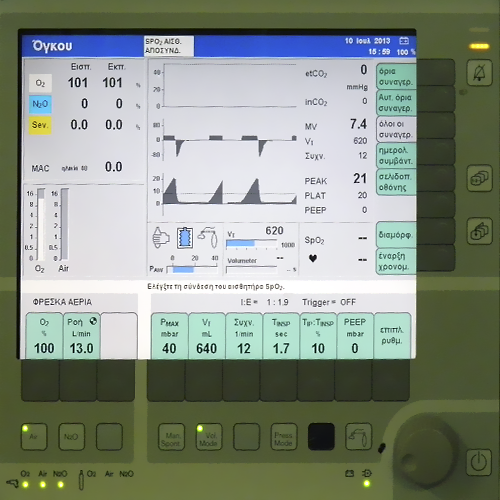
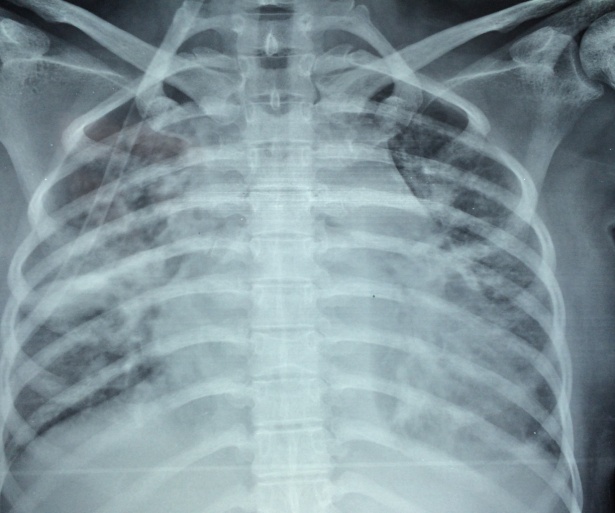
Acute Chest Syndrome (ACS) is a rare but often fatal complication in patients with micro-drepanocytic anemia as in those with beta Sickle Cell Disease (SCD). This case report refers to a female patient with known micro-drepanocytic anemia who was admitted to our ICU due to ACS. Treatment included RBC transfusions with WBC reduction, administration of FFP and plasmapheresis within 48 hours from the ICU admission. At the 3rd ICU day, HbA2 level was found elevated up to 77%. The following ICU days, the patient presented absence of the white series of the blood’s cellular components. After twelve days in the ICU the patient died due to hemodynamic shock and herniation of the brain stem. Given that sickle cell crises are potential precursors of this deadly syndrome, everyday practice should prioritize the prevention of sickle cell crises developing into ACS.

Continue reading
Neurologic complications after liver transplantation are quite common, with central pontine myelinolysis (CPM) being a rare but fatal complication. In this report, we describe the case of female liver transplant recipient who developed CPM after orthotopic liver transplantation (OLT).A 62-year old woman was admitted to the ICU for postoperative recovery after OLT. The procedure was described as uneventful. The patient had a history of decompensated cirrhosis, tension ascites, class I hepatic encephalopathy and chronic hyponatremia which necessitated repeated hospitalizations in the year prior to transplantation.The patient was unable to be weaned from ventilator support and did not show an improvement in mental status (GCS=5) despite the cessation of sedation. After neurologic consultation, a brain MRI was performed which showed evidence of CPM in the pons. Despite supportive therapy, the patient did not show an improvement of mental status and after a 55-day hospitalization in the ICU she died from septic complications.The etiology of CPM is multifactorial, with liver transplant recipients being at an increased risk. Supportive treatment is the standard of care, and there are not enough evidence supporting other types of treatment.

Continue reading
Continue reading

Dear collegues,

On behalf of the editorial board of the Greek e-Journal of Perioperative Medicine with great pleasure we welcome you to our new website www.e-journal.gr. This website was created in order to enlarge and modernize our e-journal. We would like to inform you that the Greek e-Journal of Perioperative Medicine is the electronic version of the official publication of “The Society of Anesthesiology and Intensive Medicine of Northern Greece” (ISSN 1109 – 6888). It has recognized by the Ministry of Health among the National Scientific Journals (FEK 964/20-7-2006). Publications in the journal are copyrighted. In this open access e-journal, material submitted for publication include: Editorial articles, Special articles, Clinical studies, Experimental studies, Case reports, and Correspondence letters to the editors in the field of Perioperative Care, Anesthesia, Critical care and Emergency Medicine.

Recently, our e-journal has officially accepted by the following medical libraries: DRJI – Directory of Research Journal Indexing, Journal Index.net, Medical Journal Link, ResearchBib. The 2013 Impact Factor for the journal The Greek e–journal of Perioperative Medicine is 0.638.

In this effort and following the rapid evolution of medicine and technology and always with the full support of The Society of Anesthesiology and Intensive Medicine of Northern… Continue reading

Fractures of the proximal femur are of the most frequent, especially in elderly patients. The increased frequency of these fractures highlights the need for effective management of those patients and the impact of these fractures regarding the cost to the national health system. The effects of pain in elderly patients is extremely aggravating, frequently leading to mental (confusion, delirium) and physical (cardiovascular) deterioration and complications.

The pain management of these patients in the emergency department (ED) with intravenous administered analgesics might complicate the status of these patients. The use of non-steroidal anti-inflammatory drugs (NSAID’s) might increase the risk of gastric ulceration, gastric haemorrhage and coronary syndromes, while the use of IV opioids–especially in elderly-incorporates the risk of respiratory depression, delirium, hypotension and constipation. The pain management of these patients with the use of fascia iliaca block applied in ED, or even in a prehospital setting from doctors of various specialties, paramedics or nurses seems to gain acceptance because of its steep learning curve, the simple technique, the high success rate and the low rate of significant complications.

Continue reading

Difficulties or failure in airway management are common factors leading to death and brain damage as a direct result of anesthesia. Prediction of the difficult airway enables the anesthetists to prepare for this challenging clinical scenario. Although the ability to predict accurately a difficult airway preoperatively would be of great value, it is evident from the literature that no single airway assessment can reliably predict a difficult airway. The purpose of this paper is to define the difficult airway and to review the current literature on methods used for prediction of difficult airway.

Continue reading

The aim of this study was to compare the combination of oral tramadol and midazolam to oral midazolam alone, in children undergoing adenotonsillectomy, as an oral premedication, regarding also sedation and postoperative pain relief. Sixty children selected for elective adenotonsillectomy were enrolled in this randomized, controlled prospective study. Patients were randomly allocated into two groups. Group M (n=30) received 0.5 mg.kg-1 oral midazolam and group MT (n=30) received 0.2 mg.kg-1 oral midazolam with 1 mg.kg-1 oral tramadol as a premedication 30min preoperatively. Standard general anesthesia technique was used.

Continue reading

This study was undertaken to evaluate the immediate postoperative complications in renal transplant recipients requiring Intensive Care Unit (ICU) admission. All renal transplant recipients with immediate post-transplantation complications (<1 week) admitted to our ICU from 1992 to 2012 were studied. Patients’ characteristics, transplant variables and prognosis were evaluated and data were analyzed to identify factors of outcome. Over the study period 13 men and 3 women, (26.2 % of renal transplant recipients requiring ICU admission) aged 45.4±10 years, were included in the study. APACHE II and SOFA scores on ICU admission were 17.8±4.6 and 8.4±3.6 respectively.

Continue reading

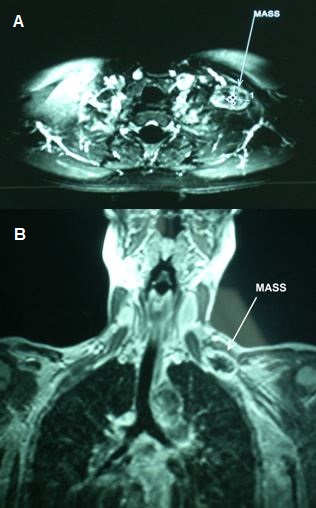
Schwannomas, known also as neurilemmomas, are considered to be benign in the vast majority of cases. Originating from the schwan cells of the neural sheath of peripheral nerves, they usually develop in the head and neck. Involvement of the brachial plexus is relatively rare, with an incidence of 0.3–0.4/100,000 person per year1. Malignant transformation is extremely uncommon. Patients’ initial symptoms include pain, loss of function, numbness or a progressively growing mass in the supraclavicular region. Neglected cases regarding larger benign tumors may present with monoparesis of an upper limb2. Primary malignant schwannomas of the brachial plexus causing monoplegia are extremely infrequent and to the best of our knowledge very few cases have been published in the international literature.

Continue reading

Dear colleagues,

The Society of Anesthesiology and Intensive Medicine of Northern Greece with great pleasure welcomes the new site of the Greek e-Journal of Perioperative Medicine (www.e-journal.gr).

From 2004, the presence of the the Greek e-Journal of Perioperative Medicine among the National Scientific Journals has been gradually increased. In this open access e-journal, material submitted for publication include articles in the field of Perioperative Care, Anesthesia, Critical care, Pain and Emergency Medicine. In this new effort the online journal (www.e-journal.gr) has the full support of the Society of Anesthesiology and Intensive Medicine of Northern Greece, looking forward to your further fruitful cooperation, hoping to continue the decent progress so far in the area of the Greek and the international medical press.

Vassilis Ourailoglou

President of Society of Anesthesiology and Intensive Medicine of Northern Greece

Continue reading

Language

Αναβάθμιση του Impact Factor

Archives

ATOM Feed
RSS Feed
RDF Feed
Creative Commons License